
 admin
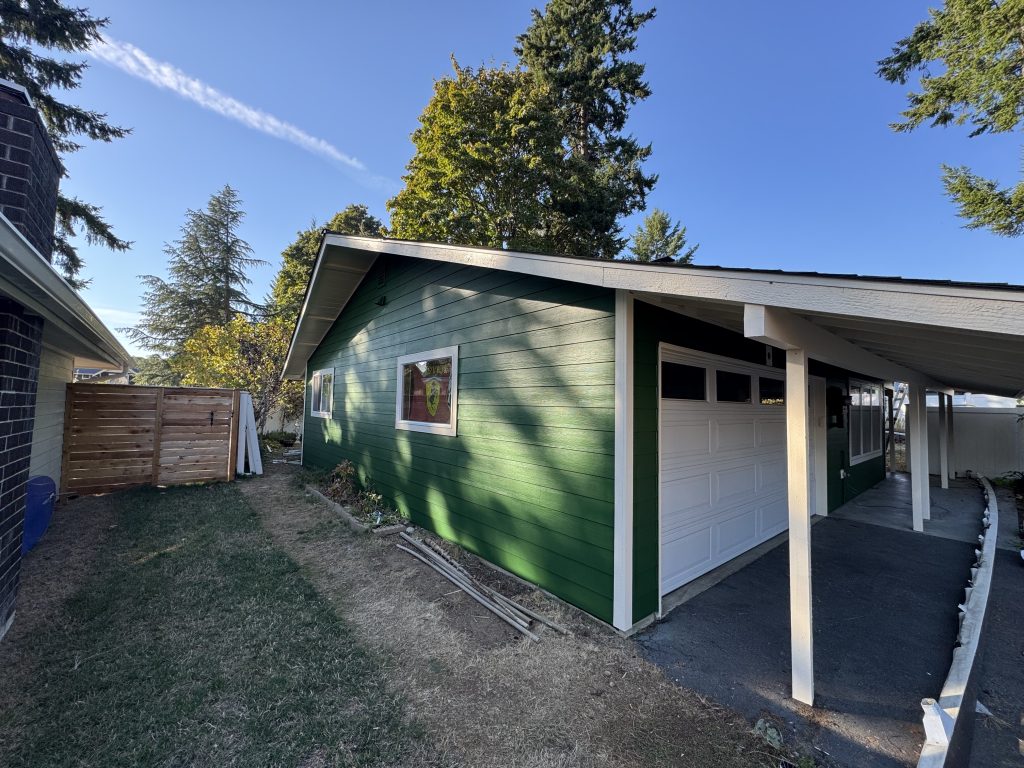
Most “best exterior paint” lists rank products by price tier and call it a day. That breaks down fast on the Eastside, where a single block can mix cedar lap siding from the 1960s, hardie board from a 2015 remodel, and a stucco addition on the same street. The paint that performs on one surface can fail early on another, no matter how many stars it has online. The better question is which coating matches the surface you actually have, and how it behaves through a wet Puget Sound winter and a short, dry summer.
Cedar Needs a Finish That Can Move With the Wood
Cedar lap and shingle siding are still common across older Bellevue and Kirkland neighborhoods, and the wood keeps absorbing and releasing moisture long after it is painted. A rigid, high-build coating cracks at the seams as the boards swell and shrink with the seasons. A 100% acrylic latex with real elasticity moves with the substrate instead of fighting it, which is why it holds up longer on cedar than on any other common siding type in this area.
Primer matters as much as the topcoat on cedar. Raw or weathered boards need an oil-based or acrylic stain-blocking primer first, especially on knots and tannin-rich heartwood, or rust-colored bleed will work its way through even a premium finish within a year.
Hardie Board and Fiber Cement Take a Film Coating, Not a Stain
Fiber cement siding, now standard on most new construction and remodels from Bothell to Sammamish, is dimensionally stable in a way wood never is. It does not swell or shrink much, so it can carry a thicker, harder acrylic film without the cracking risk cedar faces. That stability is also why a straight stain, which is built to soak into wood fiber, never bonds properly to it.
Factory-primed fiber cement panels still need a full exterior-grade topcoat, not just a touch-up at the cut edges. Edges and fastener heads are where water gets in first, and they are the spots a rushed repaint skips.
Stucco Fails When the Coating Traps Moisture Instead of Releasing It
Stucco shows up on newer Eastside builds and some older Mediterranean-style homes around Medina and Clyde Hill, and it behaves nothing like wood or fiber cement. The wall assembly underneath needs to breathe, so an elastomeric or masonry-grade acrylic with high vapor permeability is the right call, not a glossy, non-porous coating that looks good going on and seals moisture inside the wall.
Hairline cracks are routine in stucco and should be addressed before painting, not covered over. A flexible patching compound under the new coat keeps those cracks from reopening and telegraphing through the finish within a season.
West and South-Facing Trim Wears Out Years Before the Siding Does
Trim, fascia, and window casings take more direct sun and more direct rain runoff than the field of the wall, so they fail first regardless of what the main siding is made of. On an Eastside home, south and west elevations typically need a repaint two to three years before the north and east sides show any wear.
Trim also gets handled, brushed against, and washed more than flat siding, so it benefits from a harder, higher-sheen acrylic than the walls around it. Painting trim and body in the same flat finish is a shortcut that often means a second, trim-only repaint sooner than expected.
Satin Beats Flat on Most Walls, But Flat Still Wins on Rough, Weathered Siding
Flat finishes hide imperfections in old siding well, but they hold onto dirt, pollen, and the green algae film that forms on shaded, north-facing walls here. Satin sheds that grime in the rain instead of absorbing it, which is why most painters on the Eastside default to satin on the main field of a house and save flat for heavily textured or weathered boards where hiding flaws matters more than washability.
Gloss and semi-gloss belong on doors, shutters, and trim, where the harder surface resists scuffing and wipes clean, not on broad wall areas where it would highlight every ripple in the siding underneath.
Full-Home Repaints Need a Line Rated for Year-Round Humidity, Not Just Rain
Premium exterior lines from Sherwin-Williams, Benjamin Moore, and PPG all sell a “best” exterior product, and the distinction that actually matters here is mildewcide concentration and moisture-vapor permeability, not the brand name on the can. A paint built for a drier climate can look identical on the shelf and still mildew within two seasons under constant Puget Sound humidity.
Low-VOC and zero-VOC formulations in these same lines have closed most of the performance gap with standard acrylics, which matters on occupied-home repaints where residents are in and out while crews work.
Why Two Houses on the Same Block Age Differently
Surface and sheen only explain part of the picture. Sun exposure, roof overhang, gutter condition, and how much prep work went into the surface before the brush ever touched it all shift how long any given paint actually lasts on an Eastside home. We break that down in more detail, with real timelines by siding type, in how long exterior paint lasts in the Seattle climate.
The Narrow Window When This Region’s Exteriors Actually Dry
None of the choices above matter if the paint goes on during the wrong week. Acrylics need sustained dry, mild conditions to cure properly, and a late-June cold front or an early-September drizzle can undo weeks of prep. Our guide to exterior painting weather prep and timing covers how we plan around that window so the product choice above actually gets to perform the way it is rated to.
Matching the Product to the House in Front of You
Paint selection only works as the first step in a plan that includes surface prep, primer choice, and timing, all specific to the siding on your particular house. Our exterior painting services start with exactly that kind of walk-around, matching product and sheen to your siding before a crew ever shows up with a sprayer.
If you are weighing options for cedar, fiber cement, or stucco on a specific Eastside home, request a free on-site color consultation and we will tell you which line and finish actually fit what is on your walls.


